
Interest Rate Calculator
The Interest Rate Calculator calculates the true interest rate on loans with fixed terms and monthly payments. It is especially useful in situations where lenders, such as car dealers, disclose only the monthly payment and total cost, without stating the actual interest rate. To calculate interest on investments, use the Interest Calculator, or use the Compound Interest Calculator to compare how different interest rates affect growth over time.View amortization schedule
Interest Rate Calculator
Related Calculators : Interest Calculator | Compound Interest Calculator
What is Interest Rate?
Interest Rate is the amount a lender charges a borrower for the use of money, typically expressed as a percentage of the principal the original amount borrowed. In simple terms, it represents the cost of borrowing funds or, from the lender’s perspective, the return earned for providing capital. For example, if a person borrows $100 at an annual interest rate of 8%, they would be required to repay $108 at the end of one year. This additional $8 is the interest, and it illustrates how the interest rate directly determines the total cost of a loan. Even small differences in interest rates can significantly affect how much a borrower ultimately pays over time, especially for large or long-term loans.
Because of this, borrowers generally seek the lowest possible interest rates to minimize borrowing costs, while lenders and investors prefer higher interest rates to increase their potential returns. Interest rates are most commonly quoted on an annual basis, known as the annual percentage rate (APR). However, they can also be expressed for other time periods, such as monthly, daily, or even continuously,depending on the financial product and how interest is calculated and compounded.
Interest rates play a central role in nearly all formal lending and borrowing activities. Common real-world examples include Compare mortgage rates on home loans, interest charged on outstanding credit card balances, personal and business loans used to finance major purchases or capital investments, and auto loans. They are also a key factor in savings accounts, bonds, and retirement funds, where interest determines how investments grow over time. Additionally, interest rates are involved in the amortization of long-term assets, supplier discounts for early invoice payments, and broader economic activities that influence spending, saving, and investment decisions. In short, interest rates are a fundamental component of the financial system, affecting individuals, businesses, and economies at every level.
Simple vs. Compound Interest
There are two primary methods used to calculate interest: simple interest and compound interest. Simple interest is calculated solely on the principal, which is the original amount of money borrowed or invested. Under this method, interest does not accumulate on previously earned interest, making the total interest cost or return relatively straightforward and predictable over time. Simple interest is commonly used in short-term loans or basic financial arrangements where compounding is not applied.
Compound interest, on the other hand, is calculated on both the principal and any interest that has already accrued. This means that interest earned in earlier periods is added to the principal, and future interest calculations are based on this growing balance. Because of this compounding effect, interest can grow at an accelerating rate over time, allowing lenders and investors to earn interest on interest. The frequency at which interest is compounded such as annually, semiannually, monthly, daily, or continuously plays a significant role in determining the total amount of interest accrued. The more frequently interest is compounded within a given time period, the greater the total interest earned or paid will be.
In modern financial systems, most formal interest calculations use compound interest rather than simple interest. This includes mortgages, credit cards, savings accounts, investment products, and the calculations used by this Interest Rate Calculator. Unless otherwise stated, any reference to an interest rate typically assumes compound interest. To explore how different compounding frequencies affect loan costs or investment growth, or to perform more detailed calculations, you can use the Compound Interest Calculator for further analysis and comparison.
Fixed vs. Variable Interest Rates
Fixed interest rates are rates that are established at a specific percentage at the beginning of a loan and remain unchanged for the entire duration of the loan. This means that both the interest rate and the required payment amount stay consistent over time, regardless of changes in market conditions or economic factors. Fixed rates provide stability and predictability, making them especially attractive to borrowers who prefer consistent monthly payments and long-term financial planning. They are commonly used for mortgages, auto loans, and personal loans where borrowers want protection against rising interest rates.
Variable interest rates, also known as adjustable or floating rates, can change periodically throughout the life of the loan. These rates typically fluctuate based on external benchmarks such as a market index, a central bank rate, or inflation measures. As these underlying factors rise or fall, the interest rate adjusts accordingly, which can cause monthly payments to increase or decrease over time. While variable rates often start lower than fixed rates and can offer initial cost savings, they also carry greater uncertainty and risk for borrowers, particularly in environments where interest rates are expected to rise.
Both fixed and variable interest rates have their own advantages and disadvantages, and the best choice depends on a borrower’s financial situation, risk tolerance, and expectations about future market conditions. However, for simplicity and consistency, the Interest Rate Calculator presents results using a fixed interest rate, allowing users to clearly understand the true cost of a loan without the added complexity of variable rate fluctuations.
APY vs interest rate
The interest rate and the annual percentage yield (APY) are closely related but represent different ways of expressing how interest is earned or paid over time. Understanding the distinction between the two is important when comparing loans, savings accounts, and investment products.
The interest rate refers to the stated rate at which interest is charged on a loan or earned on an investment. It is typically expressed as a percentage of the principal and does not account for the effects of compounding. For example, a savings account may advertise a 5% interest rate, but that figure alone does not indicate how often interest is added to the balance. Similarly, loan interest rates show the base cost of borrowing before considering how frequently interest is applied.
APY, or Annual Percentage Yield, reflects the true annual return on an investment or savings account by taking compounding into account. It shows how much interest is actually earned over a year when interest is compounded at a specific frequency, such as daily, monthly, or quarterly. Because APY includes the effect of compounding, it is usually higher than the stated interest rate when interest compounds more than once per year.
For example, an account with a 5% interest rate compounded monthly will have an APY slightly higher than 5%, because interest earned each month begins earning interest in subsequent months. The more frequently interest is compounded, the greater the difference between the interest rate and the APY.
In practical terms, interest rates are more commonly used when discussing loans, while APY is most often used for savings accounts, certificates of deposit (CDs), and other interest-bearing investments. When comparing savings or investment options, APY provides a more accurate measure of potential earnings. On the other hand, when evaluating borrowing costs, the interest rate helps determine the base rate used to calculate payments.
Annual Percentage Yield (APY)
Annual Percentage Yield (APY) represents the real rate of return earned on a savings account or investment over the course of one year, taking into account the effect of compound interest. Unlike a simple interest rate, APY reflects how often interest is compounded such as daily, monthly, or quarterly making it a more accurate measure of how much money an account will actually earn over time.
APY is especially useful for comparing different savings and investment products. Two accounts may advertise the same interest rate, but if one compounds interest more frequently, it will have a higher APY and generate greater returns. This makes APY a standardized metric that helps consumers clearly understand and compare potential earnings across banks and financial institutions.
APY is commonly used for financial products such as savings accounts, money market accounts, certificates of deposit (CDs), and other interest-bearing investments. Financial institutions are typically required to disclose APY so that customers can easily evaluate the true earning potential of an account. The higher the APY, the more interest an investment will earn over a year, assuming the funds remain in the account for the entire period.
Annual Percentage Rate (APR)
For many types of loans, the interest rate is commonly advertised as an annual percentage rate (APR) rather than a simple interest rate. APR is widely used in contexts such as home mortgages, auto loans, and personal loans because it provides a more comprehensive picture of the true cost of borrowing. Unlike a standard interest rate, APR can include certain additional costs and fees associated with a loan, such as origination fees, administrative charges, processing fees, or other mandatory costs. These fees are often bundled into the loan amount rather than paid upfront, which allows borrowers to see the full annual cost of financing in a single percentage.
For example, when purchasing a new car, administrative or dealer-related fees are frequently rolled into the loan balance instead of being paid out of pocket at the time of purchase. Including these costs in the APR makes it easier for borrowers to understand how much the loan will actually cost over time. As a result, APR is generally a more accurate and transparent metric than the stated interest rate when shopping for loans and comparing similar financing offers from different lenders.
On the other hand, annual percentage yield (APY) refers to the rate of return earned on deposits held at a financial institution, rather than the cost of borrowing money. APY is most commonly associated with savings accounts, money market accounts, and certificates of deposit (CDs), particularly in the United States. Unlike APR, APY accounts for the effects of compound interest, showing how much an investment or savings balance will grow over the course of a year.
Uncontrollable Economic Factors that Affect Interest Rate
There are numerous factors that influence the interest rates individuals receive on mortgages, auto loans, and other types of financing. While many of these factors are beyond a borrower’s direct control, understanding how they work can be extremely valuable. Being aware of the elements that lenders consider can help borrowers make more informed decisions, plan their finances effectively, and potentially qualify for better rates when applying for loans.
Economic Policy and Inflation
In most developed countries today, interest rates fluctuate primarily in response to the monetary policies implemented by central banks. These policies are designed to guide the economy toward stability, with controlling inflation being one of their most important objectives. Inflation is defined as the general rise in the prices of goods and services over time, which leads to a decline in the purchasing power of money. Because of this relationship, interest rates and inflation are closely interconnected at the macroeconomic level: significant changes in one often influence the other.
Central banks use interest rate adjustments as a key tool to either stimulate economic growth or restrain excessive inflation. When inflation is rising too quickly, a central bank may increase interest rates to make borrowing more expensive, which can help slow spending and stabilize prices. Conversely, if economic growth is sluggish or inflation is below target levels, lowering interest rates can encourage borrowing and investment, helping to boost economic activity.
In the United States, for example, the Federal Reserve has the authority to adjust key interest rates up to eight times per year during its Federal Open Market Committee (FOMC) meetings. These adjustments influence not only consumer and business borrowing costs, such as mortgages and loans, but also broader financial markets, including bonds, stocks, and currency values. One of the Fed’s primary goals is to maintain a stable, moderate level of inflation, generally targeting a few percentage points per year, which supports long-term economic growth while preserving the purchasing power of money.
Understanding how central bank policies impact interest rates is crucial for borrowers, investors, and anyone making financial decisions. It helps explain why loan rates, savings yields, and investment returns can change over time, even when individual circumstances remain the same. By keeping an eye on monetary policy trends, individuals can better anticipate shifts in interest rates and plan their finances accordingly.
Economic Activity
In an economy, interest rates play a crucial role in influencing borrowing, spending, and overall economic activity. When interest rates are low, borrowing money becomes cheaper for both businesses and individuals. As a result, companies are more likely to take out loans to invest in business expansion, purchase new equipment, or hire additional employees. At the same time, consumers are more inclined to finance major purchases such as homes, cars, or other high-value items. This increase in borrowing and spending stimulates demand for goods and services, which can lead to the creation of more jobs, upward pressure on wages, and greater consumer confidence. More broadly, this cycle of increased spending and investment injects additional money into the economy, contributing to overall economic growth.
Conversely, when interest rates rise, borrowing becomes more expensive. Higher borrowing costs discourage businesses from taking on new debt for expansion and can slow down investment in new projects. Similarly, consumers may postpone or reduce spending on big-ticket items like houses, cars, or durable goods. As borrowing and spending decrease, consumer confidence tends to drop, and economic activity can slow down. In this way, higher interest rates act as a brake on an overheated economy, helping to prevent excessive inflation and unsustainable growth.
For these reasons, central banks use interest rates as one of their primary tools to manage and stabilize the economy. During periods of slow economic growth or recession, the central bank may lower interest rates to encourage borrowing, investment, and spending, thereby stimulating economic activity. On the other hand, if the economy is growing too rapidly and inflationary pressures are building, the central bank may increase interest rates to cool down demand and maintain price stability. By adjusting interest rates in response to changing economic conditions, central banks aim to promote steady growth, maintain employment levels, and keep inflation within a target range, ultimately supporting a healthy and balanced economy.
Unemployment Rate
The unemployment rate is a key indicator of economic health, and it has a strong relationship with interest rates and overall economic activity. When unemployment is high, a large portion of the population is without work, which means fewer people have disposable income to spend on goods and services. As consumer spending declines, businesses earn less revenue, production slows, and overall economic growth tends to stagnate. To counteract this slowdown, central banks often lower interest rates. Lower interest rates make borrowing cheaper for both individuals and businesses, encouraging spending on major purchases such as homes, cars, and investments in business expansion. By stimulating borrowing and spending, lower interest rates can help boost demand, create jobs, and support economic recovery.
On the other hand, when unemployment is very low, almost everyone who wants a job has one, and consumer spending tends to rise sharply. While this might seem positive, very low unemployment can sometimes create inflationary pressures. With a tight labor market, wages may rise rapidly as businesses compete to attract and retain employees. Higher wages increase production costs for businesses, which can be passed on to consumers in the form of higher prices. If left unchecked, this situation can lead to rampant inflation, reducing the purchasing power of money and potentially destabilizing the economy.
As a result, interest rates and unemployment rates are generally inversely related. When unemployment is high, interest rates are often lowered to encourage borrowing, investment, and consumer spending. Conversely, when unemployment is low and economic activity is strong, central banks may raise interest rates to prevent the economy from overheating, slow down excessive inflation, and maintain price stability. By carefully adjusting interest rates in response to changes in unemployment and overall economic activity, policymakers aim to maintain a balanced economy, where growth is steady, prices remain stable, and employment levels are sustainable.
Supply and Demand
The market for credit operates in a way that is similar to the market for goods and services, with prices represented in this case by interest rates largely determined by supply and demand, although the relationship is somewhat more controlled. When there is a high demand for loans or credit, such as during periods of strong economic activity or when consumers and businesses are eager to borrow, lenders may respond by raising interest rates. Higher rates help balance the increased demand and compensate lenders for the added risk of lending more funds. Conversely, when demand for credit is low, lenders often lower interest rates to encourage borrowing and stimulate economic activity.
Even though supply and demand play a significant role in setting interest rates, financial institutions such as banks and credit unions are also bound by regulatory requirements. One important limitation is the reserve requirement, which dictates the minimum amount of funds that a bank must hold in reserve and not lend out. This requirement ensures that banks maintain sufficient liquidity to meet withdrawals and obligations, and it effectively places a ceiling on the total amount of money they can lend at any given time.
In addition to regulatory constraints, lenders also consider other factors when setting interest rates, such as the creditworthiness of borrowers, the term or duration of the loan, and prevailing economic conditions. Because of this combination of market forces and regulatory oversight, interest rates in the credit market fluctuate in a dynamic but controlled manner, reflecting both the supply of available funds and the level of demand for borrowing. Understanding this interaction helps explain why interest rates change over time and why they can differ between types of loans, banks, and financial institutions.
Controllable Factors that Determine Interest Rate
Although many of the factors that influence interest rates are beyond an individual’s control, there are certain steps that people can take to influence the rates they are offered. By understanding how lenders evaluate loans and taking actions to improve their financial profile, borrowers can potentially secure more favorable interest rates on mortgages, auto loans, personal loans, and other forms of credit.
Individual Credit Standing
In the United States, credit scores and credit reports exist to provide lenders with a comprehensive view of each borrower’s financial history and overall creditworthiness. These tools help lenders assess the level of risk associated with extending loans or credit to an individual. A credit score is a numerical representation of a borrower’s creditworthiness, typically ranging from 300 to 850, with higher scores indicating lower risk. Borrowers with higher credit scores are generally viewed as more responsible and reliable in repaying debts.
Building and maintaining a good credit score is a gradual process that requires consistent financial discipline. Key factors that contribute to a strong credit score include making timely payments on loans and credit cards, keeping credit utilization low, managing a variety of credit accounts responsibly, and avoiding excessive debt. Conversely, credit scores can decrease if payments are missed or made late, credit card balances are too high relative to available credit, overall debt levels are elevated, or serious financial events such as bankruptcies occur. On average, the typical credit score in the U.S. hovers around 700, which is generally considered a good score, though higher scores offer even greater advantages.
The importance of credit scores becomes especially apparent when lenders determine interest rates for loans. Borrowers with higher credit scores are often eligible for more favorable interest rates, while those with lower scores may face higher rates or even application rejections. Scores above 750 are typically considered excellent, often qualifying borrowers for the best rates available on mortgages, auto loans, personal loans, and credit cards. From the lender’s perspective, borrowers with low credit scores or a history of late payments and bankruptcies represent higher risk. To mitigate potential losses, lenders may either decline to extend credit or charge higher interest rates to compensate for the increased likelihood of default.
For example, if a credit card holder begins missing multiple payments, the card issuer may respond by raising the interest rate on that account, reflecting the higher perceived risk. Similarly, mortgage lenders may offer higher rates to applicants with lower scores, while offering reduced rates to those with excellent credit histories. Understanding how credit scores affect lending decisions can empower individuals to take steps to improve their financial standing, maintain lower borrowing costs, and access better credit opportunities over time.
How to Receive Better Interest Rates
While an individual’s credit standing is one of the most significant factors influencing the interest rates they are offered, there are several other considerations that borrowers can keep in mind to improve the favorability of the rates they receive. By understanding these factors, borrowers can make more informed decisions and potentially lower their overall borrowing costs.
Secured versus unsecured loans – One of the most important distinctions in lending is whether a loan is secured or unsecured. Secured loans are backed by collateral, such as a home in a mortgage or a car in an auto loan. Because the lender has a legal claim to the collateral if the borrower defaults, these loans are generally considered less risky. As a result, secured loans typically carry lower interest rates than unsecured loans, which are not backed by any asset. Borrowers seeking lower rates may benefit from offering collateral, as it demonstrates to lenders a higher level of security and reduces perceived risk.
Loan specifics and structure – The terms and conditions of a loan can also affect the interest rate. For example, longer repayment periods often come with higher interest rates because the lender assumes a greater risk over an extended time horizon. Similarly, making a small down payment on a loan is seen as riskier, which can result in a higher interest rate. Conversely, borrowers who choose shorter loan terms and contribute a larger down payment are often rewarded with lower rates, as these factors reduce the lender’s risk and increase the borrower’s equity in the asset.
Credit inquiries and borrowing history – Borrowers should also be mindful of how often they apply for new credit. Each hard inquiry on a credit report can slightly reduce a credit score, signaling to lenders that the borrower may be seeking additional debt to cover financial shortfalls. Frequent applications can mark someone as a higher-risk borrower, which may lead to higher interest rates or even application rejections. By applying for credit judiciously and spacing out loan or credit applications, borrowers can maintain stronger credit scores and improve their chances of securing favorable rates.
Timing of borrowing – While individuals cannot directly control broader economic factors, they can choose to borrow during times when market conditions are more favorable. For example, during periods of economic slowdown or low demand for loans, interest rates may be relatively lower, allowing borrowers to take advantage of cheaper borrowing costs. Conversely, during periods of rapid economic growth or high inflation, interest rates are often higher, reflecting the increased cost of capital. Being strategic about the timing of borrowing can make a meaningful difference in the total cost of a loan.Calculate loan payments.
Research and comparison shopping Interest rates can vary significantly between lenders, even for similar loan products. Borrowers are encouraged to shop around and compare offers from multiple institutions. By understanding the rates, terms, and fees offered by different lenders, borrowers may find more competitive options. In some cases, sharing information about better offers with another lender can be used as a negotiation tactic to secure an even lower rate. However, it is important to carefully review all loan conditions, fees, and restrictions, as the lowest interest rate does not always equate to the lowest overall cost if there are hidden charges or unfavorable terms.
By taking these factors into account securing loans when possible, choosing favorable loan terms, managing credit inquiries, timing borrowing strategically, and comparing multiple offers borrowers can actively influence the interest rates they receive and reduce the total cost of borrowing. While credit scores remain a critical factor, these additional steps provide borrowers with opportunities to improve their financial outcomes and make smarter lending decisions.
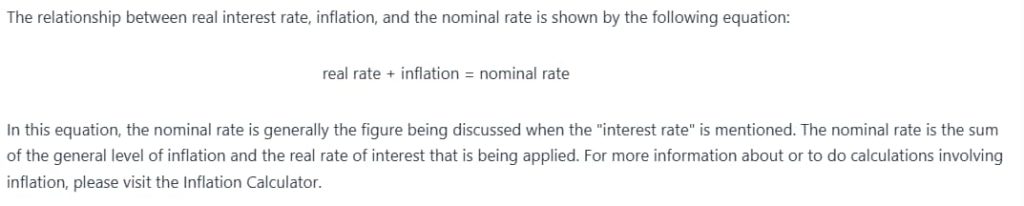
Real Interest Rate
Frequently Asked Questions
How do banks pay interest?
Banks pay interest to customers as a way of rewarding them for keeping their money in the bank. When you deposit money into a savings account, fixed deposit, or recurring deposit, the bank does not just keep your money idle. Instead, it uses your money to provide loans to other customers, invest in government or corporate securities, or run its operations.
The bank earns money from the loans it gives and shares a portion of this profit with you in the form of interest. The interest is calculated as a percentage of your deposit, and it can be paid monthly, quarterly, or at the end of a fixed period depending on the type of account. For example, if you deposit $10,000 in a savings account with an annual interest rate of 4%, the bank will pay you $400 at the end of the year (simplified calculation).
Why is interest rate calculated?
The interest rate is calculated to determine the cost of borrowing money or the reward for saving money. Without an interest rate, it would be impossible to know how much a borrower should pay for using someone else’s money or how much a depositor should earn for lending money to the bank.
For borrowers, the interest rate compensates the lender for the risk of lending money and the opportunity cost of not using it elsewhere. For depositors, it acts as a motivation to save money, since they earn extra for letting the bank use their funds.
For example, if a bank lends $50,000 at a 5% annual interest rate, the borrower will need to pay $2,500 per year as interest. Similarly, if you deposit $50,000 in a bank at 5% interest, the bank will pay you $2,500 per year for using your money.
What is the interest rate in simple words?
In simple words, an interest rate is like the “price” of money. It is the percentage that shows how much extra money you will earn or pay when you save or borrow money.
Think of it like this:
- When you save money in a bank, the interest rate tells you how much the bank will pay you for keeping your money there.
- When you borrow money from a bank, the interest rate tells you how much extra you need to pay in addition to the amount you borrowed.
For example, if you borrow $1,000 at a 6% annual interest rate, you will pay $60 as interest at the end of the year. This makes the concept of interest rate easy to understand it’s simply a percentage of the principal amount.
How do you calculate the interest rate?
The interest rate can be calculated using formulas for simple interest or compound interest depending on the situation.
For Simple Interest:
- Principal (P) = the original amount of money
- Rate (R) = interest rate per year (in decimal form for calculation)
- Time (T) = duration in years
If you want to find the Rate, you can rearrange the formula:
Example:
Suppose you deposit $5,000 in a bank for 2 years, and the bank pays you $500 as interest. To find the interest rate:
This shows that the bank is paying you a 5% annual interest rate.
For Compound Interest:
When interest is calculated on both the principal and previously earned interest, the formula is:
Where A = total amount after interest, and P, R, T are the same as above. Compound interest grows faster than simple interest because you earn interest on interest.